
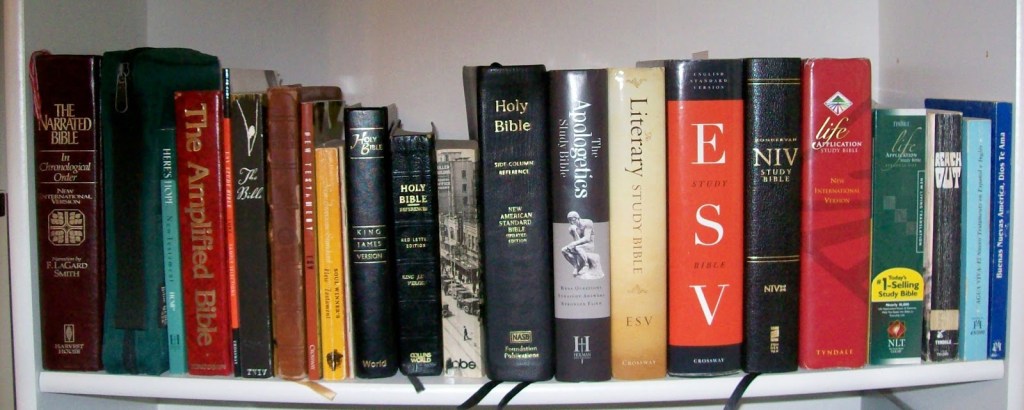
A Word About the Word
Sermon at St John The Baptist Felixstowe – Bible Sunday – 29th October 2023
Text: Heaven and earth will pass away, but my words will not pass away.’ (Matthew 24v35)
God give you peace my sisters and brothers.
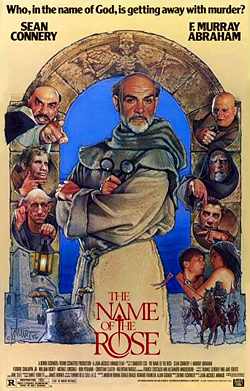
In Umberto Eco’s Medieval Monastic Whodunit The Name of the Rose (the movie of which stars Sean Connery as William of Baskerville as the Franciscan sleuth) there comes a moment when the Papal Legate is called in to settle a dispute between the Franciscans and the Benedictines. He makes his judgement using the ancient method of ‘Trial by Bible’. This involves the plaintiffs being blindfolded and, opening a bible to a random page, placing their finger on it. The verse their finger rests on will give God’s judgement in their case. Besides breaking the biblical prohibition against divination, this method of jurisprudence is fraught with danger, if we are not careful we might actually have to start doing what Jesus commands of us…
Reading the Bible, let alone, ‘marking, learning and inwardly digesting’ it is not as simple as letting it fall open at a random page. If only it were! Wouldn’t it be wonderful if Holy Writ was some form of recipe for life with a perfect verse to give an answer for every dilemma? Yes, there are some really helpful pointers – anyone who has ever reached for a Bible provided by the wonderful Gideons will have seen that marvellous page in each copy which gives suggested verses to read during the various trials of life. But sadly the changing scenes of life are many and varied and there are no rote answers, even in the Bible, for every challenges life brings to our doorstep.
Too often we have learnt to approach the Bible as if it is a single monolithic text overflowing with edicts and prohibitions instead of a marvellous and diverse record of how people down the ages have heard and responded to God’s word. There is a clue in its name – Bible does not mean ‘book’ but ‘the books’. It is not a single volume but a library and, like all libraries, contains fact and fiction, history and poetry, apocrypha and apocalyptic.
So how do we, as the Bible itself says, ‘correctly handle the word of truth’; this cornucopia of God’s relationship with Creation which tells of Jesus and His love?
Here are some pointers that have helped me:
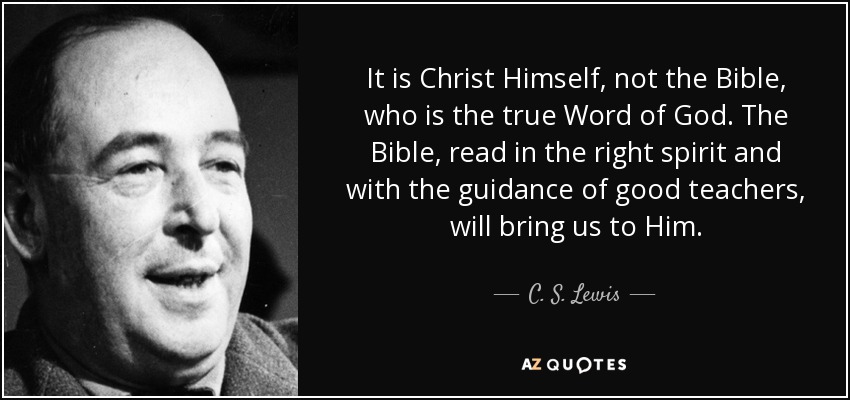
Jesus is the One who is the Word of God not the Bible.
Yes, many of the words of Jesus are contained in the Bible and Jesus Himself uses the words of the Old Testament to add depth and strength to what He proclaims. However He also tells us to not be ‘sticklers for the Law’ when it comes to reading the Old Testament. Witness how in the Sermon on the Mount Jesus takes biblical tradition, ‘You have heard it was said’, and deepens, adds to, or even abolishes it by adding ‘But I say to you’.
We must be careful to use the Bible to hear Jesus speak and never use it to restrict and confine the message of God’s love for all creation, against which all our words and deeds are to be measured
The Bible was written by people not dictated by God.
Because the Bible is our very frail and very human record of God’s dealing with us it reflects our fallen humanity and our frailty. This is perhaps seen most clearly in what are known as the Imprecatory Psalms. In their words the very human emotions of anger, revenge, and judgement spew forth. Part of Psalm 137 is an often-used example of this;
8 O daughter Babylon, you devastator!
Happy shall they be who pay you back
what you have done to us!
9 Happy shall they be who take your little ones
and dash them against the rock!
(Psalm 137v8-9)
Little wonder that some people on reading these words turn away from God asking how such violence can stand alongside the bold claim that ‘God is Love’?
Biblical literalism, reading the Bible at its face value as if every word is eternally immutable and requires unquestioning compliance, means that we will be condemned to repeat the errors of our forebears and Christ will have died in vain.
All the stories in the Bible are true stories.
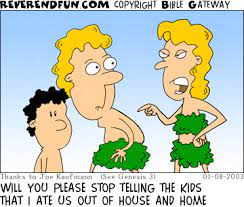
This does not mean that all the stories in the Bible are factual – after all there are two stories of creation, two stories of the Flood and even stories about a dragon – but this means that even parts of the Bible that are allegory or have become embellished down the years still tell a truth. Just as Red Riding Hood is a true story – little girls should not go wandering in the woods by themselves – so the stories in the garden of Eden are true – Humankind is the pinnacle of creation, we are placed here to grow and protect the garden, men and women are equals in God’s eyes not one subordinate to others, we will make mistakes and when we do God will still protect and care for us. After all Jesus did not have to have known both a wise and a foolish builder for his parable about the need for firm foundations to tell a truth.
And finally
The Bible is a living word that speaks to those who listen.
One of the challenges faced by those who begin Biblical Studies at Seminary is that some of the things which held your faith are challenged. Within a few weeks of beginning studies people discover that John’s Gospel had an extra chapter added to it, No one knows how Mark’s Gospel should end, Paul didn’t write Hebrews, Isaiah was written by three different people in three different eras, Moses definitely didn’t write the first five books of the Bible and Genesis was written by at least four authors all using a different name for God! Little wonder that Old Testament studies is the most frequent topic that has to be re-taken!
And yet, even with all its hodge-podgieness, its tribal infighting in the Old Testament as well as the New, its unanswered questions and paradoxes, its apparent contradictions, the Bible still speaks.
Like God’s Word it is a living word that will, if we but allow it, pierce our souls and judge our hearts (Hebrews 14v12-13) and challenge us to live transformed lives just as if Jesus Himself stood in front of us, stretched out a hand and said, ‘Come, follow me.’
So it was that a twenty-something young man heard the words of Isaiah on the shores of False Bay saying ‘Whom shall I send, and who will go for us?’ how could he respond other than by saying ‘Here am I; send me!’
Later when he was a know-it-all vicar (perhaps he still is, who knows?) he found himself humbled by two prostitutes he had deigned to help when they told him of their love for the Bible and especially the verse which reads, ‘God did not send his Son into the world to be its judge, but to be its saviour.’
And still to this day, every time he finds himself challenged by those who would belittle the faith, decry the possibility of a loving Creator, and mock him for his beliefs with the man born blind who was thrown out of the Synagogue proclaims, ‘All I know, is that once I was blind but know I see.’
Please God, may that young man, know grown old, never stop searching the Scriptures to learn more of the ‘Old, old story of Jesus and His love.’
May each of us learn to learn of God through the words written by other people about God. And as we learn them may they become our meat and drink and food for the journey home to the author of life.
This blog ‘A Word About the Word’ is copyright © Andrew Dotchin 2023. It may be reproduced free of charge on condition that the source is acknowledged.
Matthew 24.30-35 – The Permanence of the Word of God
Jesus said ‘Then the sign of the Son of Man will appear in heaven, and then all the tribes of the earth will mourn, and they will see “the Son of Man coming on the clouds of heaven” with power and great glory. 31 And he will send out his angels with a loud trumpet call, and they will gather his elect from the four winds, from one end of heaven to the other. 32 ‘From the fig tree learn its lesson: as soon as its branch becomes tender and puts forth its leaves, you know that summer is near. 33 So also, when you see all these things, you know that he is near, at the very gates. 34 Truly I tell you, this generation will not pass away until all these things have taken place. 35 Heaven and earth will pass away, but my words will not pass away.’
 Suffolk Vicar