

Good Moaning! Jesus Goes to Nouvion
Sermon for 15th Sunday after Trinity – 7 September 2024 – St John the Baptist, Felixstowe
Text: But she answered him, ‘Sir, even the dogs under the table eat the children’s crumbs.’. (Mark 4v28))
God give you peace my sisters and brothers.
Or should I say, having recently spent time in Annecy practicing my skills in Franglais, Good Moaning! Fortunately my French studies at school have helped me surpass those of Officer Crabtree in the TV Series ‘Allo, Allo’ and, apart from an occasional mix up between ordering ‘Un Café Noir’ when what I really wanted was a Black Coffee, I seemed to get by.
But apparently this is not true for all tourists. I have heard it said that some of our compatriots learnt all their French whilst watching the antics at Café René and think that speaking English with a French accent will get the job done. Some even use the tried and tested method of repeating themselves in English but this time ‘speak more s-l-o-w-l-y and LOUDER!’ Worry not ‘mes amis’, this is not a habit reserved to the British, other English-speaking peoples face similar challenges with even a former President of the USA proclaiming that:

The problem with the French is that they have no word for entrepreneur…. (George W Bush)
Today, as we continue our journey with Jesus in Mark’s Gospel we find something similar in Our Lord’s relationship with the locals.
Today Jesus doesn’t visit Nouvion for a croissant and a café noir, but crosses the border to Phoenicia to take tea in Tyre before an afternoon constitutional to Sidon, where He seems to fall foul of some local customs. No Jesus doesn’t speak slowly and LOUDLY to the mother with a sick daughter, but He does give a fair imitation of being an ill-informed, if not ignorant, tourist.
What is He doing? Is He being a show-off to the locals? Is He indulging in some sort of colonial superiority? Or is He playing to the audience of those travelling with Him to give an opportunity for the Gospel to be proclaimed loud and clear?
In the previous chapter of the Gospel of Mark, Jesus has been ignored by His own people at Nazareth – none of them wanting His bread or miracles, fed a multitude of strangers around Lake Galilee, and now heads northwards to Phoenicia and the foreign towns of Tyre and Sidon where He encounters not one but two ‘foreigners’ who presume they may ask a favour of the famous visitor from down South.
In the first of these encounters a mother, who quite possibly may have been a servant at the table from which He was eating, a mother asks for bread; a life-giving bread that will heal her child.
In the second encounter a deaf mute receives healing and then, perversely, is asked to not speak about it!
What is wrong with Jesus? He is in the business of providing bread and healing but doesn’t seem to want to dispense it to people who are ‘foreign’ even though he is eating at their tables and sharing their hospitality? Something is afoot.
When He proclaims, ‘it is not fair to take the children’s food and throw it to the dogs.’ (Mark 7v27) He speaks about the self-same bread served to Him from the hands of one of those so-called ’dogs’. Surely there is something deeper here?
Jesus restores hearing to a man and gives him power to speak but them goes on to order those around Him to not use their voices. Surely something more profound is here?
Let’s look more closely.

Jesus starts his journey in Nazareth with his own people, ‘and he was amazed at their unbelief. (Mark 6v6)’. He can do nothing.
He leaves his homeland and travels to a foreign land where those who are not His people proclaim, ‘He has done everything well; he even makes the deaf to hear and the mute to speak.’ (Mark 7v37).
In Nazareth, where there should be praise and faith, Jesus is met with silence and rejection.
In Phoenicia, where the prejudiced can see only ‘dogs’ and ‘foreign’ types, Jesus finds the goodwill of those who are rejected and a declaration of faith from them.
Those who should have rejoiced at the presence of God, those who liked to refer to themselves as the Children of God, reject the Son of God.
Those who have been rejected by the ‘Children of God’ welcome the Son of God and become purveyors of the Gospel of love and faith, welcome and healing, inclusion and acceptance.
What does Jesus, the Syrophoenician mother, and the man from Sidon, teach us?
First: everyone deserves bread and all are welcome at the banquet of God. Each of us must continually hunger for food from the hand of God.
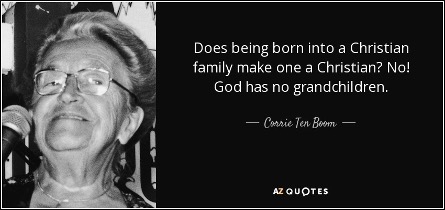
Second: just because we may be born into a faith doesn’t relieve us of the responsibility of living out that faith. None of us dare presume that our heritage is a passport to heaven. As Corrie ten Boom reminds us ‘God has no grandchildren’. If we don’t live out the Good News who will?
Third: when we have been fed by God and welcomed into the Reign of God we have a responsibility to spread the love of God. Even if it means we have to hang out with foreigners and people of that sort.
We have a choice.
Do we want to be like those at Nazareth, comfortable to dwindle away in our holy huddle or do we want to step out into strange and unfamiliar places, with names like Ad Astral Close, Beach Street, and Sea Road, and imitate our beloved Redeemer in sharing bread and faith, life and hope with everyone.
After all what’s so difficult? Telling the Good News is simply One beggar telling another beggar where to find bread. Here in our parish we are blessed with bread of both kinds. Bread that feeds the body and Bread that feeds the soul. Neither of them cost us anything.
All we need learn to do is to give it away.
This blog ‘Good Moaning! Jesus Goes to Nouvion’ is copyright © Andrew Dotchin 2024. It may be reproduced free of charge on condition that the source is acknowledged.
The Syrophoenician Woman’s Faith (Mark 7v24-37)
Jesus went away to the region of Tyre. He entered a house and did not want anyone to know he was there. Yet he could not escape notice, 25but a woman whose little daughter had an unclean spirit immediately heard about him, and she came and bowed down at his feet. 26Now the woman was a Gentile, of Syrophoenician origin. She begged him to cast the demon out of her daughter. 27He said to her, ‘Let the children be fed first, for it is not fair to take the children’s food and throw it to the dogs.’ 28But she answered him, ‘Sir, even the dogs under the table eat the children’s crumbs.’ 29Then he said to her, ‘For saying that, you may go – the demon has left your daughter.’ 30So she went home, found the child lying on the bed, and the demon gone.
Jesus Cures a Deaf Man
Then he returned from the region of Tyre, and went by way of Sidon towards the Sea of Galilee, in the region of the Decapolis. 32They brought to him a deaf man who had an impediment in his speech; and they begged him to lay his hand on him.33He took him aside in private, away from the crowd, and put his fingers into his ears, and he spat and touched his tongue. 34Then looking up to heaven, he sighed and said to him, ‘Ephphatha’, that is, ‘Be opened.’ 35And immediately his ears were opened, his tongue was released, and he spoke plainly. 36Then Jesus ordered them to tell no one; but the more he ordered them, the more zealously they proclaimed it. 37They were astounded beyond measure, saying, ‘He has done everything well; he even makes the deaf to hear and the mute to speak.’
 Suffolk Vicar