Words, Words, Words! – Eliza Doolittle and Doubting Thomas
Sermon for Easter 2 (Low Sunday) – Sunday 28 April 2025 – All Saints Kesgrave
Text: Jesus performed many other signs in the presence of his disciples, which are not recorded in this book. 31 But these are written that you may believe that Jesus is the Messiah, the Son of God, and that by believing you may have life in his name. (John 20v19-31)
God give you peace my sisters and brothers.
Words, words, words!
I’m so sick of words
I get words all day through
First from him now from you
Is that all you blighters can do?
Don’t talk of stars, burning above
If you’re in love, show me
Tell me no dreams, filled with desire
If you’re on fire, show me
Eliza Doolittle – My Fair Lady
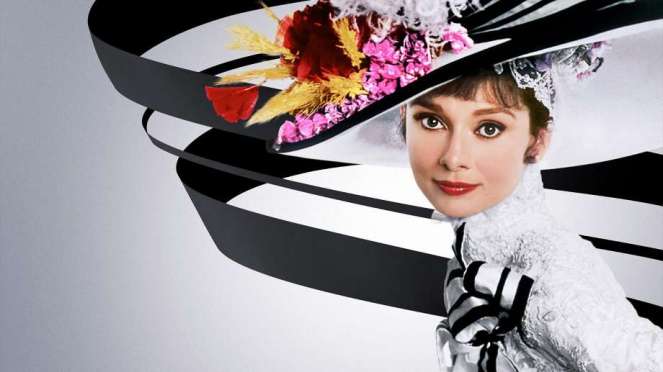
I have a sneaky suspicion that St Thomas is Eliza Doolittle’s Patron Saint!
Mind you I don’t blame her, or him, for that matter. Too many words had been spoken in and around Jerusalem. Too many tales of crucifixions and too many rumours resurrections Well what do you expect if you will waste your time listening to the ramblings of grief-stricken wailing women? There are very good reasons why they are not allowed to preach in the synagogues. Whatever next? Women priests? Women bishops?
Eliza and Thomas are fed up with being told about things. They want to touch and feel and hold and hug instead. Words have lost their power. They want proof They need deeds. A hug, a kiss, a tender touch, a finger hesitantly finding a nail-shaped hole, a hand slipped inside a wounded Messiah’s side…
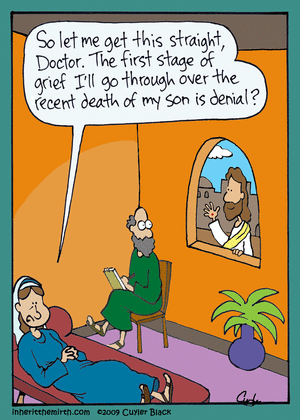
Oftentimes I sit and pray through this passage and ask our Redeemer, ‘Lord, did it hurt all over again when Thomas touched you? Did it bring back the pain of that horrible Friday noontime you suffered?’ And, in the middle of my fey-ness I see Jesus wince, which then turns into a smile as He says, ‘Yes, a little, but it was worth it.’
Poor old Thomas always gets a bad press. Forever doomed to be to Doubting Thomas and never the author of the words ‘My Lord and my God!’ and in so saying become First Apostle to proclaim the Divinity of Jesus. (It is conveniently forgotten that the other disciples didn’t believe until Jesus had shown them His wounds either – read verse 20)
What do we have to hand to help us believe? Words, words, words when what we need is we need wounds, wounds, wounds?
Our evangelist knows our dilemma but doesn’t seem to be able to help us. Compared to the other three gospels , John’s gospel is light on deeds (only seven signs) and heavy, very heavy, on words. Wouldn’t the more multiple miracle working Jesus of Mark be easier to believe in than this ‘miserly’ Messiah of John? John knows about some of the other stuff but doesn’t even bother to write it down. Hear what he tells his readers.
Jesus performed many other signs in the presence of his disciples, which are not recorded in this book. (John 20v30)
Interesting isn’t it? There are more deeds, more signs, out there to write about, to encourage his readers but he deliberately leaves out most of them. Why?
Is he saying that the deeds Jesus performed are not important? No. Otherwise he would not have included any of them at all.
Is he saying that we should expect to live a faith where the miraculous is not to be expected? No. For only in John’s gospel does Jesus promise that, with the aid of the Holy Spirit, we will work greater wonders than even He did. (John 14v12)
Is he saying, as Thomas’ story seems to say, that ‘seeing is believing’? No! Because his final words are for those, for you and for me, who are called to believe but yet have not seen.
But these are written that you may believe that Jesus is the Messiah, the Son of God, and that by believing you may have life in his name. (John 20v31)
The point of the story of Thomas is not to prove the resurrection by touching nail-scarred hands and spear-wounded side but to allow Jesus through John to speak to us. John is not writing for the disciples or even for tardy Thomas, they already believe. John is writing for us.
‘Because you have seen me, you have believed; blessed are those who have not seen and yet have believed.’ (John 20v29)
Faith is not, and never has been a case of ‘Seeing is believing’ but rather one of ‘Believing is not seeing.’
Hundreds, thousands even, of people saw the signs that Jesus did, ate of the bread and fishes that were miraculously multiplied, and though seeing, yet still refused to believe. And having seen and not believed then went on to cry ‘Crucify!’

‘Seeing is believing’ is a fallacy. It has always been patently obvious that people will choose to not believe the proof of their own eyes and the witness of those around them. People will only believe when their hearts have been touched and turned.
This is painfully apparent in modern society. The Flat Earthers have been replaced by Climate Change Deniers and Snake Oil salesman have been run out of business by those who refuse to have their children vaccinated against Measles and Polio and themselves (even now) against COVID. No my friends, believing has absolutely nothing to do with seeing.
From where then does faith spring? If seeing is not believing, and if Jesus cannot reach out his wounds for us to touch them today, are we doomed to doubt?
We turn back to the Scriptures…
But these are written that you may believe that Jesus is the Messiah, the Son of God, and that by believing you may have life in his name. (John 20v31)
John and the early Church knew that, even with the powerful presence of the Holy Spirit amongst us, we would still hunger for the touch of the Messiah to affirm our faith. So they wrote the story down, in fact they wrote it down four times, so that even though we may not ‘see and believe’ we would be able to ‘read and believe’ and through believing have life.
Faith is more than a question of intellectual assent. Faith is a journey. It is a weighing up of experience and word. It is a willingness to listen combined with a dis-ease with how things are in our lives. It is a decision to put our trust outside ourselves and to allow our lives to be touched by the witness of the Word seen in the lives of others. Faith is a meeting between the hunger in the emptiness of our hearts with the food of faith, which is the Word of God. It is not for nothing that the writer of the book Hebrews reminds us,
‘…the word of God is alive and active. Sharper than any double-edged sword, it penetrates even to dividing soul and spirit, joints and marrow; it judges the thoughts and attitudes of the heart. (Hebrews 4v12)
But will we let it pierce us just as the spear pierce our beloved Redeemer’s side?
Will we allow ourselves to be laid bare before the truth of the resurrection?
This is our Thomas moment.
This is the moment when we decide if we believe.
Believing is not about seeing things, in the end it is not even about reading of the things that Jesus said and did.
Believing is about us, you and I, kneeling in front of the risen wounded Christ. It is about being brave enough to know that the next words we will say, and the words by which we will lead our lives, are these and these alone.
‘My Lord and my God!’
This blog ‘Words, Words, Words!’ is copyright © Andrew Dotchin 2025
oooOOOooo
Jesus appears to His Disciples
19 On the evening of that first day of the week, when the disciples were together, with the doors locked for fear of the Jewish leaders, Jesus came and stood among them and said, ‘Peace be with you!’ 20 After he said this, he showed them his hands and side. The disciples were overjoyed when they saw the Lord.
21 Again Jesus said, ‘Peace be with you! As the Father has sent me, I am sending you.’ 22 And with that he breathed on them and said, ‘Receive the Holy Spirit. 23 If you forgive anyone’s sins, their sins are forgiven; if you do not forgive them, they are not forgiven.’
Jesus appears to Thomas
24 Now Thomas (also known as Didymus), one of the Twelve, was not with the disciples when Jesus came. 25 So the other disciples told him, ‘We have seen the Lord!’
But he said to them, ‘Unless I see the nail marks in his hands and put my finger where the nails were, and put my hand into his side, I will not believe.’
26 A week later his disciples were in the house again, and Thomas was with them. Though the doors were locked, Jesus came and stood among them and said, ‘Peace be with you!’ 27 Then he said to Thomas, ‘Put your finger here; see my hands. Reach out your hand and put it into my side. Stop doubting and believe.’
28 Thomas said to him, ‘My Lord and my God!’
29 Then Jesus told him, ‘Because you have seen me, you have believed; blessed are those who have not seen and yet have believed.’
The Purpose of John’s Gospel
30 Jesus performed many other signs in the presence of his disciples, which are not recorded in this book. 31 But these are written that you may believe that Jesus is the Messiah, the Son of God, and that by believing you may have life in his name. (John 20v19-31)
 Suffolk Vicar